If you operate a business in Lagos—be it a tech startup on Victoria Island, a logistics company in Oshodi, or a retail chain in Ikeja—you’ve likely heard the news.
Nigeria’s commercial banks have just raised over N4.65 trillion in fresh capital
The Central Bank of Nigeria’s recapitalization deadline came and went on March 31, 2026. And yes, the banks are now sitting on the largest pool of lendable funds we’ve seen in a decade.
But here’s the reality that most business owners miss:
Having money to lend is not the same as wanting to lend it to you.
In fact, banks are now more selective than ever. Why? Because they’ve borrowed this new capital at a cost. They cannot afford bad loans. So they are hunting for only the cleanest, most transparent, most predictable businesses.
The question is: Is yours one of them?
If not, here’s exactly what you need to fix—starting tomorrow morning.
1. Stop treating your business and personal accounts as one pot
This is the single biggest reason Nigerian SMEs get rejected.
“I transfer money from my company account to pay school fees, then put my personal salary back in next week—it’s fine.”
No. It’s not fine.
When a bank’s credit analyst opens your statement and sees:
- Rent payments to a landlord’s personal account
- Transfers labelled “family upkeep”
- Random inflows from friends
…they cannot tell your business performance from your personal life. That means they cannot trust your cash flow.
Fix it: Open a dedicated business account (if you haven’t already). Run 100% of business revenue and expenses through it. Pay yourself a fixed salary or a director’s draw. Keep the line clean.
This is not accounting theory. This is the difference between “approved” and “declined.”
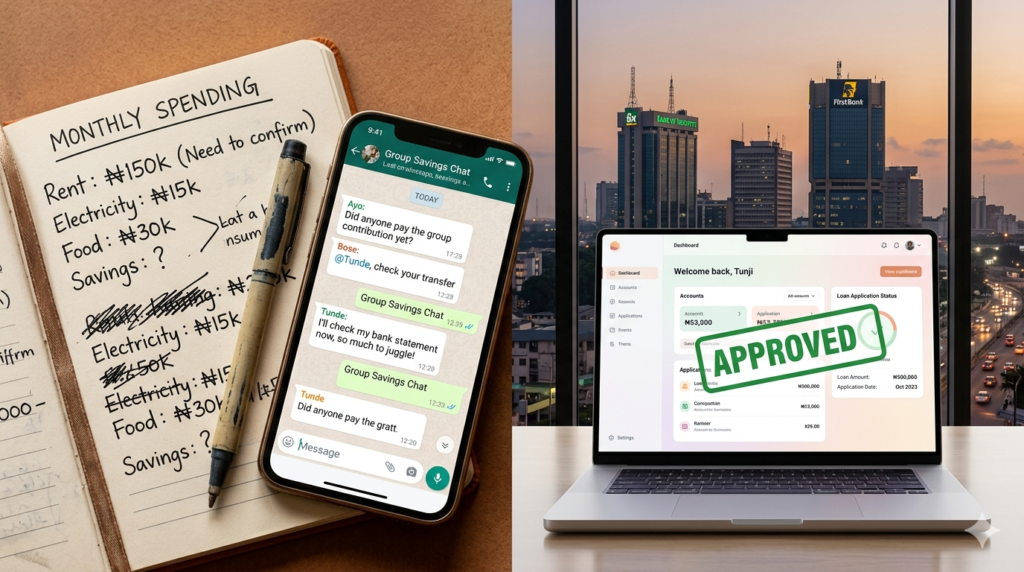
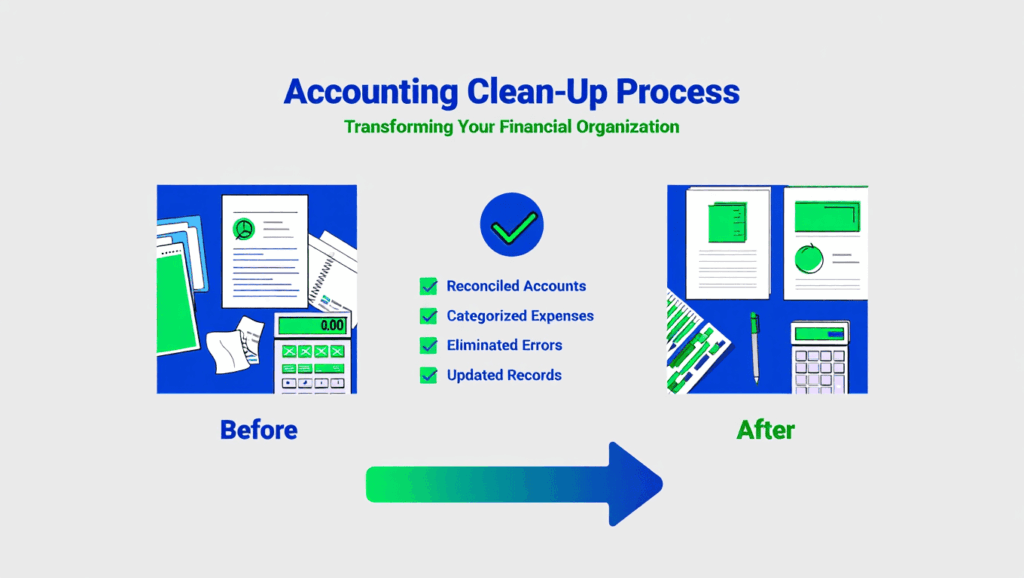
2. Get your books out of the “notebook and WhatsApp” phase
We visit clients in Lagos and see beautiful sales—but the records are
- A torn notebook
- WhatsApp messages with suppliers
- Bank alerts saved as screenshots
That might work for daily operations. It will never work for a bank loan application.
Banks want:
- Profit & Loss statement (last 12 months)
- Balance sheet (assets vs liabilities)
- Cash flow statement (where money comes and goes)
If you don’t have these, you don’t have a business in the eyes of a lender—you have an expensive hobby.
Fix it: Use simple accounting software (like QuickBooks, Zoho, or even a well-structured Excel template). Or outsource to a finance consultant (that’s us). For a few hundred thousand naira a month, you get books that open doors.
If you don’t have clean financial statements, don’t worry. Our Business Consulting service helps Lagos SMEs go from messy records to bank-ready within 30 days.
3. Show them your tax history—even if it hurts
Many Lagos business owners avoid tax because the system feels broken. We understand.
But here’s the truth a bank will never tell you publicly:
They check your Tax Identification Number (TIN) and FIRS filing history before they check your collateral.
If you have zero tax history, you are invisible to their risk department. If you have inconsistent filings, you look unreliable.
Fix it: Start small. Register for VAT and remit what you collect. File annual company income tax even if you report a loss (losses are fine; hiding is not). Within 6–12 months, you have a track record.
A clean tax history is the cheapest form of loan security you can buy.
What happens if you fix these three things?
You stop competing with thousands of other “interested” applicants.
Instead, you enter a small pool of bank-ready businesses—and banks fight over those.
We’ve seen it happen:
- A logistics firm in Apapa got a ₦150m working capital loan within 14 days of cleaning its books.
- A beauty supply distributor in Yaba accessed ₦40m at 22% interest (half the market rate) because her records were immaculate.
- A construction company in Lekki used its clean tax history to secure a ₦500m facility for a housing project.
This is not luck. It is preparation.
Your next move
The N4.65 trillion is in the system. Some businesses will borrow it.
Will it be yours?
You don’t need to do everything alone. We help Lagos businesses get bank-ready—from bookkeeping to financial statements to loan application support.
Call this a free consultation. Walk us through your current records. We’ll tell you exactly what’s missing and how fast we can fix it.